The Non-Human Corporation

The Reality Behind Argentina's Draft General Companies Law (Algorithmic Decision-Making, Patrimonial Personhood, and the Dissociation of Imputation)
Gastón Rey
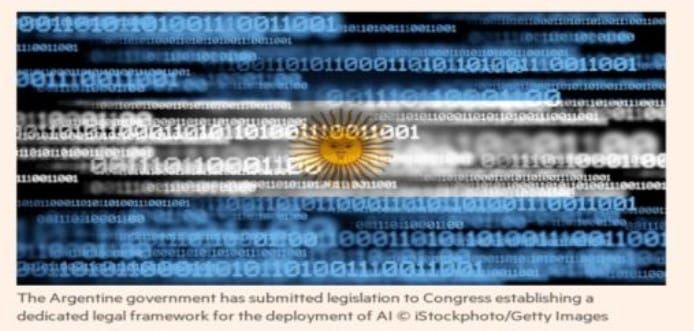
In May 2026 the Argentine Executive submitted to the Senate a draft General Companies Law (INLEG-2026-53661873-APN-PTE) intended to derogate and replace Law 19.550. A presidential op-ed in the Financial Times presented the reform’s centerpiece as a “non-human corporation”: an entity operated by artificial-intelligence agents in which human shareholders are optional. This article argues that the enacted operative provisions perform no such ontological move. Across its operative provisions -- the general definition of the company (art. 1), legal personality and disregard of the corporate veil (art. 3), the “Automated Company” (art. 14), and the Decentralized Autonomous Operative Company or DAO (arts. 258–265) -- the bill never constitutes artificial intelligence as a legal subject. The company remains an ordinary legal person; primary liability remains patrimonial and corporate; human anchors persist; and the use of AI by the administrative organ expressly preserves directors’ liability (art. 102). The genuine novelty lies elsewhere. The reform introduces an unprecedented dissociation between three loci that classical company law traditionally aligned: decision, personhood, and imputation. The decision is functionally delegated to autonomous systems; legal personhood remains vested in the company; and liability is ultimately channeled either to the company’s patrimony or to human actors bearing supervisory duties. The result is not the recognition of artificial intelligence as a legal subject but the emergence of a structurally fragmented architecture of responsibility. That fragmentation, rather than the rhetoric of “non-human corporations,” constitutes the proposal’s most significant doctrinal innovation.
Keywords: Artificial Intelligence; Corporate Law; Legal Personhood; DAO; Corporate Liability; Algorithmic Governance; Argentina; Automated Companies; Legal Theory; Corporate Responsibility.
I. Introduction
In late May 2026, the Argentine Executive remitted to the Senate a draft “General Companies Law” (INLEG-2026-53661873-APN-PTE) intended to derogate and replace Law 19.550, in force since 1972. The reform arrived wrapped in an unusual act of political framing: an op-ed signed by the President in the Financial Times presenting its technological centerpiece as a new species of legal entity: a “non-human corporation,” operated by artificial-intelligence agents or robots, in which human shareholders would be permitted but not required.[1] The framing travelled faster than the text. Commentary, enthusiastic and alarmed alike, converged on the premise that Argentina proposed to recognize artificial intelligence as a corporate subject.
This article advances a contrary reading, grounded in the legal project itself. The bill does not, anywhere in its operative provisions, constitute artificial intelligence as a center of imputation. What it regulates is the modality through which an otherwise ordinary company operates, not the ontological status of the operator. The distance between the op-ed’s rhetoric and the statute’s text is not a drafting accident; it is the analytically decisive fact. Once that distance is mapped, a more interesting object comes into view, not a non-human person, but a structural dissociation between decision, personhood, and imputation that classical company law had always kept aligned, and whose separation genuinely complicates the attribution of liability.
Next section reconstructs the rhetorical claim and contrasts it with the operative text. This article will show, provision by provision, that the company remains an ordinary legal person and that primary liability remains patrimonial and corporate. It then will identify the genuine novelty (the dissociation thesis) and situates it within a relational theory of legal subjecthood. Section VI reads the proposal against the comparative record. Section VII notes an internal tension between the reform’s ontological rhetoric and the methodological individualism of the tradition the Government claims. Section VIII concludes.
II. The rhetorical claim and the operative text
The op-ed’s proposition can be stated in three moves. First, that the law would create a corporation operated by artificial intelligence. Second, that such a corporation could exist without human shareholders. Third, that limited liability is the precondition that makes such entities viable. The cumulative impression is ontological: a new kind of person, non-human, capable of acting and of being acted upon in law.
The bill does not support any of these inferences. Where the op-ed speaks of a non-human corporation, art. 1 still defines the company as the undertaking of “one or more persons” who contribute capital, and art. 3 declares that “the company is a legal person”, the subject is the company, never the algorithm.[2] Where the op-ed speaks of an entity operated by AI, art. 14 merely labels as “Automated” a company of any existing type that pursues its object through autonomous algorithmic systems “without requiring … human resources for its ordinary operation”: a statement about operation, not about subjecthood.[3] Where the op-ed dispenses with human shareholders, the bill requires the statute to identify the partners (art. 10) and, even in the DAO, to maintain a permanent link between each participation and the identity of its holder (art. 261.7).
The contrast is sharpest precisely where the rhetoric is boldest. The most “autonomous” figure in the bill (the DAO) is the one most densely tethered to human imputation: a legal representative who must be a natural person, a promoter who answers without limit, and a human compliance officer wherever the anti-money-laundering regime applies. The non-human corporation, at every layer of the text, has a human floor.
III. The company remains an ordinary legal person
Three propositions follow from the text, and together they dissolve the ontological claim.
First, the locus of personhood is unchanged. Article 1 retains the classical contractual-organizational definition of the company; article 3 declares it a legal person and preserves the doctrine of ‘inoponibilidad’ (disregard of legal personality) expressly allowing liability to be extended or transferred to partners or controllers where the form is used to violate the law, public order or good faith, or to frustrate the rights of third parties.[4] The “Automated Company” of article 14 is not a new type but a qualifier attaching to an existing type (corporation, limited-liability company, simplified joint-stock company). Its single substantive rule is that the company “answers with its patrimony to third parties for the damage caused by its autonomous algorithmic systems.” The provision does not create a subject; it confirms that the existing subject (the company) bears the consequences of its tools.
Second, the human anchor is never severed. The DAO must have a legal representative who is a natural person and who binds the entity in all acts requiring human intervention (art. 260); a promoter, necessarily human, who answers without limit and jointly for the obligations of incorporation (art. 262); identified members, with a protocol that ties each participation to a traceable identity (art. 261.7); and, where applicable, a human compliance officer before the Financial Information Unit (art. 264).[5] Tellingly, art. 92 in fine prohibits a DAO from serving as administrator of another company: a small but eloquent refusal to let the most algorithmic entity occupy the most decision-laden office.[6]
Third, primary patrimonial liability remains corporate. The order of imputation the bill actually enacts is conventional: first the company’s assets; then, upon disregard of personality or supervisory fault, a human. What the op-ed presents as a subject that acts without answering is, in the text, a company that answers exactly as companies always have, with its patrimony, and behind it, under defined conditions, its members.
IV. From Alignment to Dissociation
Classical company law is built upon a practical alignment between three dimensions: the actor who decides, the legal person in whose name the decision is made, and the subject to whom liability is ultimately attributed. Although corporate personality already introduces a degree of separation between natural and juridical persons, the chain remains intelligible because corporate decisions are generated through identifiable human organs.
The bill alters this architecture. Autonomous systems become the immediate locus of operational decisions, while personhood remains vested in the company and responsibility remains attached to human supervisors. The three dimensions cease to coincide. What emerges is not a new legal subject but a new structure of attribution.
V. The genuine novelty: decision, personhood, and imputation come apart
If the bill does not make artificial intelligence a subject, why does it feel novel? Because it separates three things that classical company law kept together.
In the orthodox model, the natural person who decides (the director), the legal person in whose name the decision is taken (the company), and the locus of imputation (the company’s patrimony, and derivatively the director’s upon fault) are aligned by a chain of human volition: the director deliberates, the company acts, liability follows the deliberation. The Automated Company and the DAO break that chain at its first link. The locus of decision migrates to an algorithmic agent that the statute itself calls “autonomous” (art. 14); the locus of personhood remains the company; and the locus of imputation remains a human; but a human who, under art. 102, bears “the duty of configuration and supervision of the system and its results” over a process that is, by construction, not fully foreseeable or controllable.
This is the structural anomaly. Article 102 preserves the director’s responsibility while the decision that triggers it is no longer, in any robust sense, the director’s decision.[7] The human is retained not as the author of the conduct but as its address. The dissociation is therefore not the fictional creation of a non-human author; it is the retention of a human respondent for an authorless act.
The project re-converge decision and imputation, and both are exceptional rather than ordinary. Supervisory assumption, under art. 102 the director who configures and monitors the system answers for algorithmic conduct, as though the duty of oversight collapsed the gap: a liability for the system’s output mediated by the director’s own fault in design or supervision. Through veil-piercing under art. 3, the human partner answers when the corporate form is abused and the patrimonial shield falls. Outside these two gateways, the company’s patrimony stands alone between the algorithmic decision and the injured third party.
Here a relational theory of legal subjecthood earns its keep. On the account I have elsewhere called “the constitutive third”, legal personality is not a property an entity possesses in isolation but a status conferred within a triangular relation: a subject is constituted as such by, and answerable before, a third that is neither itself nor its counterparty; the legal order that recognizes it and can hold it.[8] An algorithm has no such standing: it can be neither addressed nor held; it cannot appear before the constitutive third. The bill, tellingly, never tries to make it appear. It keeps a human at the vertex where someone capable of answering is required. What it does not do, and this is the cost, is ensure that the human kept there is the one who decided. The constitutive relation is preserved in form and hollowed out in substance: someone can answer, but not the one whose act is in question.
What we can consider as algorithmic constitutionalism names the broader stakes. The constitutional premise that public and private power must be imputable to a responsible subject comes under pressure when decisional power migrates to systems that cannot be made accountable in their own name. The reform does not breach that premise, it keeps a responsible subject in place, but it strains it, by widening the distance between the subject who answers and the process that decides. That distance, not a phantom non-human person, is the object that constitutional and company-law scholarship should now track.
VI. The comparative record
The proposal is neither as unprecedented nor as safe as its framing suggests. In 2017 the European Parliament contemplated a status of “electronic person” for sophisticated autonomous robots; the idea drew an open letter from artificial-intelligence and legal experts warning that it was conceptually confused and would dilute liability, and it was abandoned.[9] The contrast is instructive: Europe considered, and rejected, precisely the ontological move the op-ed advertises and the Argentine project declines to make it...
The 2025 withdrawal of the EU’s AI Liability Directive cuts both ways.[10] It removes a harmonised liability backstop; but it also signals a retreat from special AI-liability regimes toward ordinary fault and product rules, which is, in substance, what art. 102 does when it routes algorithmic harm back through the director’s duty of care. The European Union's AI Act imposes obligations on providers, deployers, importers, and operators, but never on artificial-intelligence systems themselves. The regulatory architecture presupposes that accountability must remain attached to human or juridical actors even when operational decisions are increasingly mediated by autonomous systems.
The same logic can be observed in decentralized autonomous organizations (DAOs). Jurisdictions such as Wyoming have developed legal frameworks allowing DAOs to operate through smart contracts and decentralized protocols. Yet the legal subject remains the DAO as an incorporated entity rather than the protocol itself. The software may execute decisions automatically, but rights, duties, and liabilities continue to attach to legally recognized persons.
Judicial practice points in the same direction: “Sarcuni v. bZx DAO-2 is a useful mirror.[11] A United States court treated a decentralized autonomous organization as a general partnership and exposed token-holders to personal liability, refusing to let decentralized form defeat imputation. The Argentine DAO, with its mandatory human representative and unlimited-liability promoter, reaches a comparable result by design rather than by litigation, confirming, again, that the text is more conservative than its propaganda. Its distinctive feature is not that it recognizes artificial intelligence as a legal subject. It does not. Rather, it formalizes a model already visible elsewhere: increasingly autonomous systems operating within legal structures whose personhood and responsibility remain fundamentally human. The comparative record suggests that contemporary legal systems are converging on a common solution: algorithmic governance without algorithmic personhood.
If the comparative experience teaches anything, it is that legal systems have generally rejected algorithmic personhood while simultaneously expanding algorithmic decision-making. The Argentine proposal follows the same path. Its novelty therefore lies not in the creation of a new subject, but in the growing separation between the actor that decides and the actor that answers.
VII. The op-ed ideology contradiction
There is, finally, a tension worth naming between the reform’s rhetoric and the intellectual tradition the Government invokes. Methodological individualism --the Austrian premise that only individuals act, and that collective entities are shorthand for the actions of persons-- sits awkwardly with the public claim to have created an entity that acts without persons.[12] The real text is, in fact, more faithful to that tradition than the op-ed: it insists, at every layer, on an acting and answering human. In that respect, the bill is considerably more Hayekian than the rhetoric used to promote it. The rhetoric of the non-human corporation is thus not merely doctrinally inaccurate; it is in tension with the methodological commitments of those advancing it.
VIII. Conclusion
The draft does not create non-human companies. It creates a dissociation between decision, personhood, and imputation: the algorithmic agent occupies the functional place of the decision, the company retains patrimonial personhood, and a human bears a duty to supervise processes he no longer fully controls. That is a smaller claim than “the law recognizes artificial intelligence as a person,” and a more unsettling one, because it survives contact with the text.
What presents itself as a question about what artificial intelligence is, is in truth an answer about who decides and who answers and the reform’s quiet achievement is to make them different people. Naming that structure, rather than the phantom of the non-human person, is the doctrinal task ahead.
The bill does not recognize artificial intelligence as a legal person. Nor does it create a genuinely non-human corporation. What it creates is something subtler and arguably more consequential: a legal architecture in which the place of decision, the place of personhood, and the place of responsibility no longer coincide. The algorithm decides, the corporation owns and the human answers. That dissociation (not the fiction of a non-human legal subject) is the reform’s true innovation and the doctrinal problem it leaves behind.
[1]Op-ed signed by the President of Argentina, Financial Times (2026). The claims attributed here are paraphrased; the article describes an AI-operated 'non-human corporation' in which human shareholders are optional. https://www.ft.com/content/f93022fe-43f7-437d-abd8-06c457c0a43c
[2]Draft General Companies Law (INLEG-2026-53661873-APN-PTE), art. 1 (concept of company: 'one or more persons' who undertake to make contributions) and art. 3 ('the company is a legal person'). https://aldiaargentina.microjuris.com/wp-content/uploads/2026/06/proyecto-ley-general-sociedades.pdf
[3]Draft General Companies Law, art. 14 ('Automation'): a company of any existing type that develops its corporate object through autonomous algorithmic systems or AI agents, without requiring employees or human resources for its ordinary operation, is an 'Automated Company' and answers with its patrimony for the damage caused by such systems.
[4]Draft General Companies Law, art. 3 (disregard of legal personality): liability may be extended or transferred to partners or controllers where the corporate form is used to violate the law, public order or good faith, or to frustrate the rights of third parties.
[5]Draft General Companies Law, arts. 258-265 (Decentralised Autonomous Operative Company, 'DAO'): art. 260 (legal representation must be held by one or more natural persons); art. 261.7 (the protocol must keep each participation linked to the traceable identity of its holder); art. 262 (the DAO answers with its patrimony, including acts executed automatically by the protocol; the promoter answers without limit and jointly for incorporation obligations); art. 264 (human compliance officer before the Financial Information Unit where applicable; identification of beneficial owners).
[6]Draft General Companies Law, art. 102 ('AI Systems in Management': the use of AI or algorithms by the administrative organ does not exclude or limit directors' liability, nor excuse the duty of configuration and supervision of the system and its results); art. 92 in fine (a DAO may not be administrator of another company).
[7]Draft General Companies Law, art. 102.
[8]The author develops the notions the 'constitutive third', a relational account on which legal subjecthood is conferred within a triangular relation, before an order capable of holding the subject to account - in separate work.
[9]European Parliament resolution of 16 February 2017 with recommendations to the Commission on Civil Law Rules on Robotics (2015/2103(INL)), para. 59(f), contemplating a status of 'electronic person' for sophisticated autonomous robots; abandoned after the 2018 open letter of artificial-intelligence and robotics experts opposing electronic personality.
[10]Proposal for a Directive on adapting non-contractual civil liability rules to artificial intelligence ('AI Liability Directive', COM(2022) 496); its withdrawal was announced in the European Commission's 2025 Work Programme.
[11]Sarcuni v. bZx DAO, No. 22-cv-618 (S.D. Cal. 2023): a decentralized autonomous organization treated as a general partnership, with token-holders exposed to personal liability.
[12]L. von Mises, Human Action (1949), on methodological individualism: only individuals act, and collective entities are conceptual shorthand for the actions of persons.