
Rewriting Road Physics: The Legal Crossroads of the Tesla Roadster
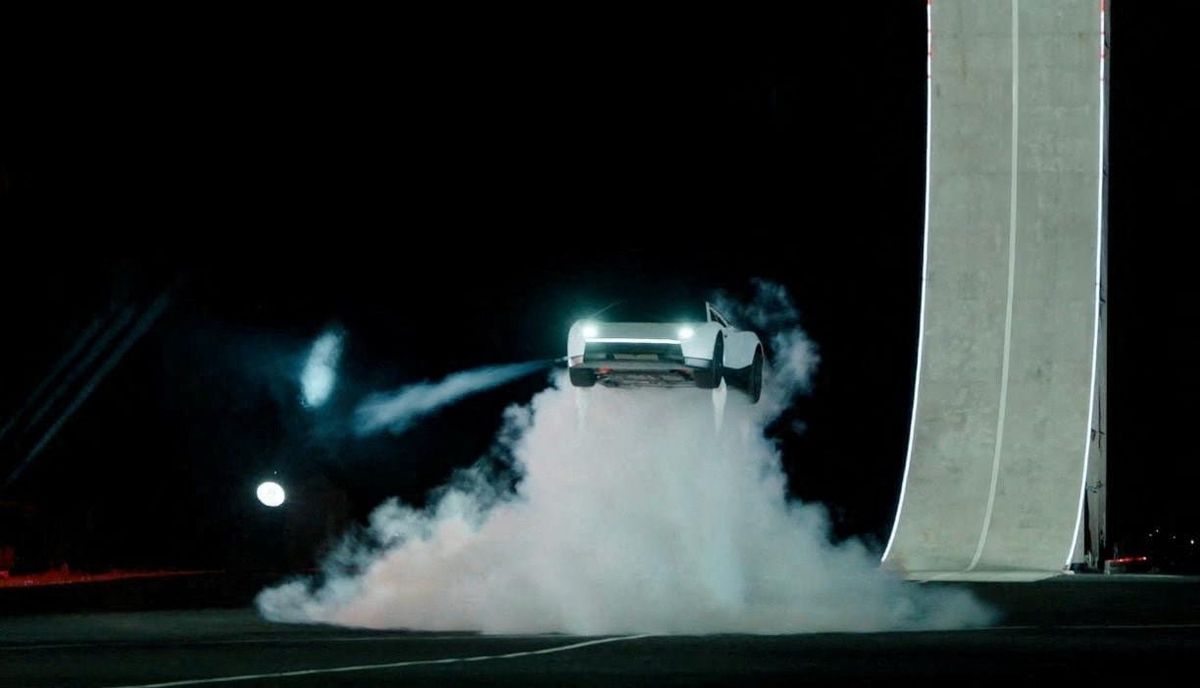
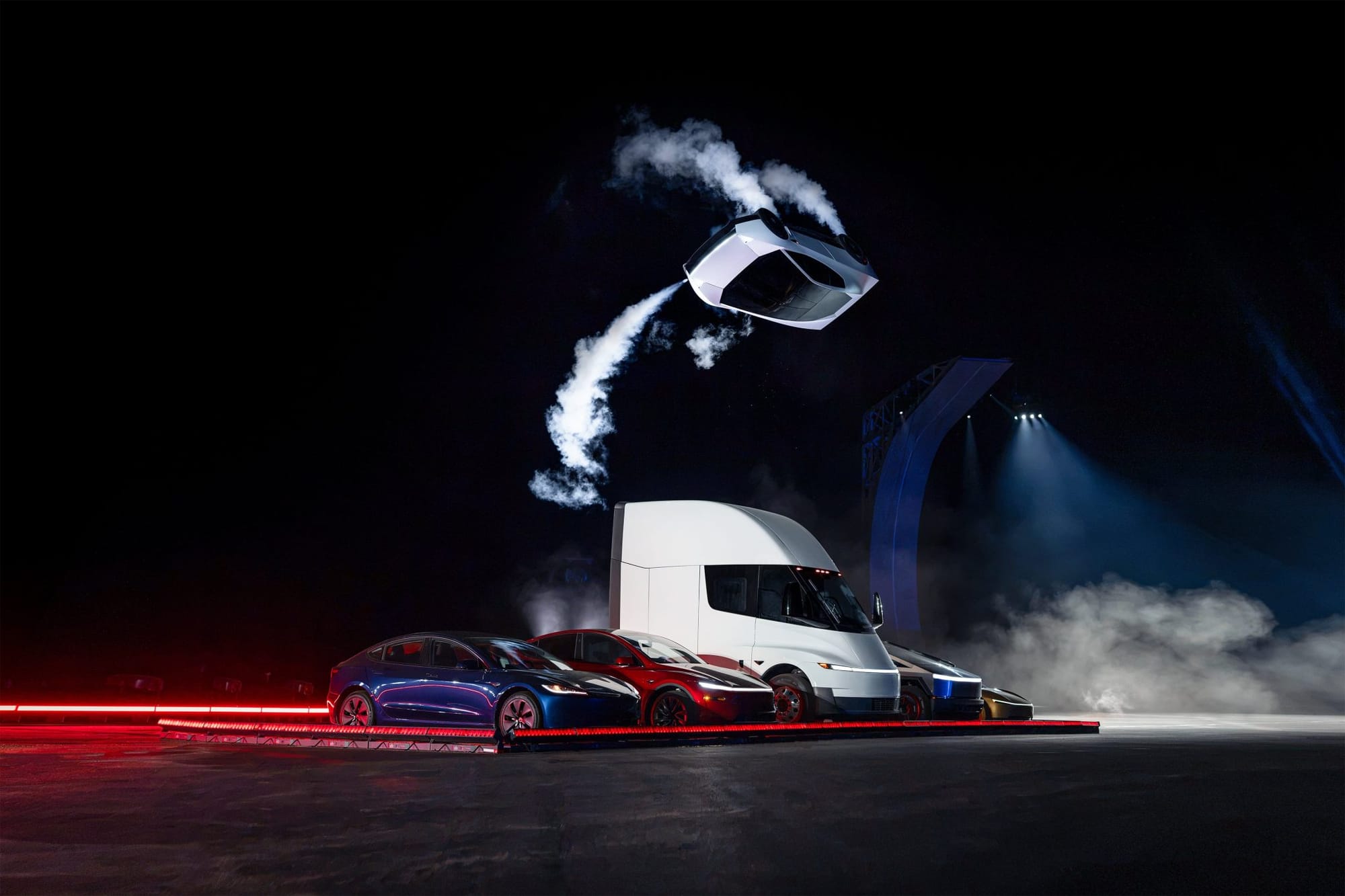
The auto industry has historically operated on clearly defined regulatory certainties: four wheels firmly planted on the pavement, a steering wheel, and compliance with traffic laws. Autonomous driving has already shaken up the board, but on those same foundations. The spectacular unveiling of the Tesla Roadster at SpaceX's facilities in Texas pushed the boundaries further by adding cold-gas thrusters designed for aerial maneuvers and ballistic jumps. The company is not only defying the physics of the road; it is also opening an unprecedented regulatory maze between the automotive industry and civil aviation.
1. Tesla's Strategy: Three Versions to Dodge the Legal Brakes
Most likely already aware of the insurmountable regulatory obstacles facing a mass-market flying vehicle, Tesla has officially segmented its lineup[1] to separate the marketing from the sellable product. The first car, called Performance: is a traditional two-seat sports car without aerial thrusters, with active aerodynamics and a suction system, designed for conventional road homologation ($50,000 reservation). Next is the Thrust: it keeps the two-seat layout and adds rear thrusters for extreme acceleration (0 to 60 mph [96 km/h] in 0.81 seconds) without vertical takeoff ($250,000 reservation). And finally, the Rocket (let's call it “the extreme car”): the extreme experimental variant, which would eliminate the passenger seat to house ultra-high-pressure compressed-air tanks. Designed for aerial maneuvers and jumps, it will be available by invitation only and for private settings.
2. Redefining Road Physics: Downforce and the Likely Significant Reduction of Highway Impacts
One might think the premium version is just a way for millionaires to have extreme experiences, but cold-gas technology could bring about a revolution in the active prevention of serious highway crashes, since it does not depend on tire-to-asphalt friction. Let's go through each extreme feature.
i.The “Reverse Ground Effect” and the 190 km/h Curve
Picture a sharp curve where grip on the asphalt breaks at 130 km/h; entering it at 190 km/h would mean an inevitable run-off. By firing the upper thrusters pointed upward together with its active underbody suction system, the vehicle would generate instant aerodynamic load (downforce) of probably thousands of pounds on the chassis. This would press the car onto the asphalt with a likely reduction in inertia, allowing it to take the curve at speeds that once defied physics.
ii.The “Emergency Jump” in the Face of a Head-On Collision
Consider a two-lane highway where a failed pass puts a truck head-on in your path. In many scenarios, conventional brakes are useless for lack of space, and the situation often amounts to a likely death sentence.
But in this extreme situation, firing the lower thrusters would allow an evasive jump or an ultra-short parabolic trajectory over or around the obstacle[2], which could turn a high-energy crash into a three-dimensional lifesaving maneuver (provided the landing is managed correctly).
AI Results
I asked AI (Claude, ChatGPT, and Gemini) to assess thrust vectoring vs. physical limits (the impact of active thrusters on lateral and braking dynamics) based on the prompt included in the references[3]. These are the results (translated from the Spanish originals and based on probable, approximate data).
"I. ChatGPT:
A. From 130 to 190 km/h: What Changes Physically
If the vehicle takes the same curve, the required lateral force increases with the square of the speed:
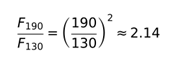
Therefore, at 190 km/h the vehicle needs approximately 2.14 times the lateral force it needs at 130 km/h to hold the same path.
Checking the consistency of the g values. Scenario 1: 1 g at 130 km/h → 2.14 g at 190 km/h. The theoretical result for the same mass and the same turning radius, assuming that 1 g represents the lateral acceleration at 130 km/h.
Scenario 2: 2.5 g at 190 km/h → 1.17 g at 130 km/h. The corresponding value for the same curve, if 2.5 g is the lateral acceleration at 190 km/h.
B. Can Downforce Explain the Jump from 1 g to 2.5 g?
In principle, additional downforce can allow the tires to transmit greater lateral force before losing grip. But it cannot be inferred from the data provided that the Roadster's system generates the load needed to go from 1 g to 2.5 g.
If the values represent lateral acceleration, 2.5 g amounts to a lateral force demand of roughly 2.5 times the vehicle's weight. That is a very high demand for a street car and would require an extraordinary combination of tires, downforce, force distribution, and dynamic control (…) My assessment is that the physical hypothesis is reasonable, but the 2.5 g figure remains to be verified.
Conclusion: the hypothesis that active propulsion expands the possibilities for control is physically plausible (…) However, the data do not yet prove that the Roadster can safely take a curve at 190 km/h, or that it can brake or avoid a collision better than a conventional car.
II. Gemini:
A. The Barrier of Energy Consumption and Mass:
Physically, going from 1.0 g to 2.5 g of lateral acceleration in a vehicle of roughly 1,800 to 2,000 kg requires a phenomenal force. If the tires can only provide the equivalent of 1 g of grip, the cold-gas thrusters would have to generate the remaining thrust (an extra 1.5 g, equivalent to nearly 30,000 newtons of force). Although thrust vectoring can generate this force, the limitation is volume. A cold-gas thruster system depletes its high-pressure tanks (COPVs) extremely quickly. Conclusion: The concept is viable under the laws of physics, but strictly as an ultra-short burst system (milliseconds or a couple of seconds). It would not be able to sustain a full curve at 190 km/h; rather, it would deliver an instant “corrective kick” to prevent a spin or run-off. It is a single-use survival system that must be repressurized before it can be used again.
B. The New Physical Limit: Materials Science
While cold-gas technology validates the mathematical possibility of multiplying traction or braking in a fraction of the normal distance, the real bottleneck shifts to materials. Withstanding 2.5 g of lateral force implies extreme structural stress that the civilian auto industry is not used to handling. The sidewalls of an ordinary street tire would run a high risk of debeading or collapsing, as would the suspension components.
In conclusion, the propulsion physics is sound and achievable, but it would require the car's peripheral components (tires and chassis) to match aerospace standards to ensure a safe maneuver.
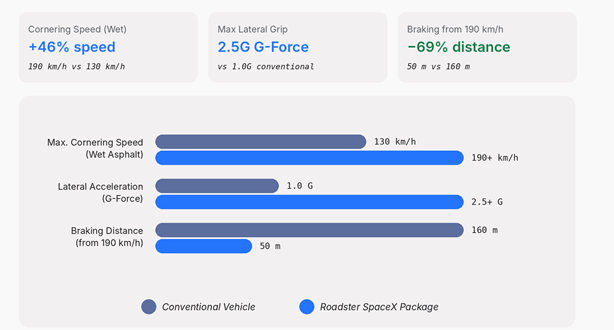
III. Claude:
A. The Starting Data Do Not All Measure the Same Thing
On the same curve, going from 130 to 190 km/h multiplies the required lateral force by (190/130)² ≈ 2.14. If 1 g is enough at 130 km/h, about 2.14 g is needed at 190 km/h—not 2.5 g; with 2.5 g, the same curve would allow about 205 km/h. The figures are compatible with the chart's “190+,” but one assumption does not hold up: the chart refers to wet asphalt, and in those conditions a street tire rarely exceeds 0.6–0.8 g. The 1 g starting point is already optimistic.
The braking reference compares distances, not speeds: 160 m versus 50 m from 190 km/h. That amounts to decelerating at 0.89 g (reasonable on dry pavement) versus 2.84 g. Neither figure accounts for reaction time: at 190 km/h, one second of reaction already eats up 53 m—more than the entire braking distance attributed to the Roadster. The advantage, therefore, exists only if the system is activated automatically.
B. Pushing Down Is Not the Same as Pushing Sideways
Fan suction. It uses atmospheric pressure and battery power, so it can be sustained through the entire curve. It has concrete precedents (the Brabham BT46B and the McMurtry Spéirling) and is the most defensible way to “glue the car to the road.”
Cold-gas thrusters. If a jet pushes the car against the ground, grip increases by only μ times that thrust; with μ ≤ 1, it is more efficient to point the same jet directly sideways or forward. Moreover, the gas is finite. Taking the roughly 1,700 kg (about 3,700 lb) reported for the car and a typical cold-gas specific impulse (about 70 s), stopping in 50 m requires about 31 kN of additional force for nearly 2 seconds: roughly 85 kg of gas per maneuver, about a third of the approximately 250 kg of air Tesla says the Rocket carries.[4] Sustaining 2.14 g through a full 90° curve would consume more than 100 kg, nearly half the tank.
I agree with Gemini that this is a burst system, but I disagree about the bottleneck: if the jet supplies the lateral force directly, the tire keeps working at 1 g. The load falls instead on the thruster mounts, on yaw control (if the thrust does not pass through the center of mass, the car rotates), and on the driver's body.
C. What Is Defensible
The most plausible benefit is not the jump but lateral evasion. Moving over one lane (3.5 m) takes 0.84 s at 1 g and 0.53 s at 2.5 g. With a truck coming head-on and a closing speed of about 280 km/h, those 0.3 s are worth roughly 24 meters of margin. Jumping over the obstacle is the least plausible option: takeoff is feasible, but landing at that speed on an occupied lane remains unsolved.
Technically defensible wording: active thrusters could momentarily expand evasion and braking margins in an emergency, provided they are activated automatically and with a sufficient gas reserve; they do not allow sustained cornering speeds above conventional ones, and the published figures remain unverified."
3. The International Legal Framework and the Institutional Clash (NHTSA and the FAA): Car, Aircraft, or Both?
It is not hard to imagine that the dual nature of this system will pose a real puzzle for regulators worldwide. On the one hand, there is an overlap of jurisdictions, since in the United States, while the National Highway Traffic Safety Administration (NHTSA) oversees crashworthiness on the ground, the Federal Aviation Administration (FAA) would, in principle, hold authority over any device that performs sustained flight in airspace. Yet, as we will see below, the agency itself has stated that this vehicle does not meet its definition of an aircraft, which leaves a significant regulatory gap. A similar duality exists in Europe with EASA and the European Commission, and in Latin America with agencies such as Argentina's ANAC and Chile's DGAC.
The U.S. National Highway Traffic Safety Administration (NHTSA) requires passive and active safety standards (rearview mirrors, pedestrian protection) that the demonstration prototype does not meet. The FAA, for its part, would ordinarily claim jurisdiction over any device capable of sustained lift in airspace; if it declines to treat the Roadster as an aircraft, it is unclear which agency would oversee the vehicle's aerial maneuvers.
A Significant Risk
As for the assessment of the urban environment, releasing high-velocity jets of compressed air poses collateral risks in densely populated areas (harm to third parties, flying debris, or destabilized cyclists). For this reason, regulation will need to clearly define the scenarios in which activation is allowed. Indeed, discharging cold gas at extreme pressures near pedestrians or cyclists is an obvious danger in urban settings. Asked whether the vehicle would be street legal, Elon Musk sidestepped a technical answer, replying: “It depends on your street”[5].
4. A Hybrid Hypothesis: License Tiers (“E-Aero”) and the Role of AI
Given the extraordinary potential benefits (and in order not to ban a technology with life-saving potential, while taking its dangers fully into account) I believe global regulation would require a special, ad hoc regulatory solution, covering both the government authorization to drive the Roadster and the scope and manner of its use. So I imagine this 3 different levels:
1. Level 1. Ground vehicle with aerodynamic assistance. Downforce and assistance systems are evaluated as safety and vehicle-dynamics technologies. The regulatory focus is vehicle homologation, its behavior, and the protection of third parties.
2. Level 2. Vehicle with active emergency propulsion. This adds activation conditions, operating limits, failure modes, system control, and liability for automated decisions. There is no need to assume the vehicle is an aircraft to identify these problems.
3. Level 3. Vehicle that actually performs aerial operations[6]. Special Driver's License (E-Aero Category): Perhaps in the form of an ad hoc endorsement requiring drivers to train in simulators to handle vertical/lateral G-forces and three-dimensional aviation dynamics, though at a basic or elementary level focused on this car's capabilities. G-simulator training: preparing drivers to react to lateral and vertical G-forces without losing their vision or their composure.
4. It would probably require training in three-dimensional dynamics: theoretical and practical modules in basic aviation covering vertical safety clearance and trajectory management.
5. Use restricted to routes with complementary AI management: To prevent negligent use on public roads, regulations could require that takeoff propulsion or extreme downforce be geofenced and subject to co-management with the autonomous system (Full Self-Driving), once the human has activated the system (for example, managing the thrusters to land safely, consistent with the external sensors). The car's computer would manage the “emergency jump” after activation. Geofencing and AI intervention are proposals that would have to confront a difficulty: an automated control system can reduce human error while introducing failures of its own. That is why I envision it operating only after human activation. The rule would need to establish what happens in the event of sensor loss, a miscalculation, an improper activation, or a conflict between human and automated control, so that automation does not, by itself, become the safety guarantee that justifies the vehicle's authorization.
Expert Opinion
Jameson Dow, who covers electric-vehicle technology for Electrek, ran the numbers on the claims made at the unveiling:
He questioned the downforce figure Tesla displayed (“There's no need for 4,700kg of downforce on what is apparently a sub-1,700kg car,” he wrote, adding, “I wouldn't be surprised if some liberties were taken”), and he warned that, “as best we can tell, the thruster system can only run for a few seconds at full power,” with a refill that currently takes six or seven hours.[7]
Lars Moravy, Tesla's vice president of vehicle engineering, told Hagerty that “when we're accelerating, we can break the laws of tire physics.”[8] While road engineering reminds us that tires depend on friction with the ground, thrusters change that limitation. Commentators such as Marques Brownlee reacted with skepticism: “This is a prank, right?” he posted, noting that Tesla had “really just got on stage and said this newly designed 4000+ pound car can do flips.”[9]
Regulators point to the absence of a legal framework for vehicles of this kind. In the United States, confirming the gap noted earlier, the FAA told Politico that “the Tesla vehicle does not meet the FAA's definition of an aircraft,” and Cathy Chase, president of Advocates for Highway and Auto Safety, said the demonstration “presents numerous questions regarding the safety of the vehicle if it was introduced on public roads.”[10] The UK Civil Aviation Authority (CAA) stressed that any manufacturer must “demonstrate that it meets the relevant safety, equipment and operational standards,” and that drivers must be “suitably qualified to operate the aircraft within the intended airspace.”[11]
Open Questions: A Milestone Deferred to 2028
This milestone in locomotion will no doubt keep generating plenty of discussion and debate. How will insurers classify a crash resulting from a jump maneuver on a public road? And will buyers of the Rocket version be required to hold a pilot's license before delivery in 2028?
The Rocket version of the Tesla Roadster will probably operate as an experimental vehicle for closed tracks or private property. Nevertheless, the debate is already open: if aerospace physics can redefine road safety, the laws here on Earth should be redefined as well.
The Roadster Event
[1] https://www.tesla.com/roadster/reserve
[2] While these remain an experimental hypothesis, yet to prove its superiority over conventional maneuvers in certain situations with more time and space.
[3] AI Prompt: Independent technical assessment: Thrust Vectoring vs. Physical Limits. The Impact of Active Thrusters on the Lateral and Braking Dynamics of the Tesla Roadster.
"Act as an independent evaluator with expertise in vehicle dynamics, classical mechanics, and road safety. The goal is to assess, on a preliminary basis, whether the thrust vectoring and active downforce systems announced for the Tesla Roadster could expand a vehicle's lateral control and braking margins, and what their physical limits are. Take as your starting points the following preliminary data, attributed to a previous AI evaluation: Comparison speeds: 130 km/h and 190 km/h. Acceleration or dynamic load values expressed in g: 1 g and 2.5 g. A braking reference involving speeds of 160 km/h and 50 km/h, associated with a 190 km/h scenario. Do not assume these values are correct or that they correspond to equivalent conditions. Examine their physical consistency and point out any ambiguity in their interpretation. 1. Lateral dynamics and downforce. Explain how the lateral force demand changes when going from 130 to 190 km/h on the same curve. Assess what greater downforce can contribute, and distinguish that effect from the lateral force that a thruster pointed in that direction could generate directly. Analyze the relationship between the 1 g and 2.5 g values. Determine whether they are compatible with the same curve and the same conditions, or whether they require additional assumptions. 2. Thrust vectoring and braking. Assess conceptually whether active thrusters could complement conventional braking or alter an emergency trajectory. Distinguish between longitudinal, lateral, and vertical thrust. Examine the braking reference of 160 to 50 km/h and its relationship to the 190 km/h scenario. If the distance, deceleration, time, or test conditions are missing, explain what can and cannot be inferred. 3. Physical limits and conclusions: Determine which benefits are physically plausible, which depend on an unverified engineering configuration, and which claims would be overstated given the available data. Do not invent Roadster specifications or attribute the capabilities of one version to another. You may use simple equations and calculations derived from the data provided, stating your assumptions. The aim is neither to confirm nor to refute the hypothesis in advance; the aim is an independent assessment of the relationship between thrust vectoring, downforce, grip, lateral dynamics, and braking. Conclude with a brief evaluation: what is plausible, what remains unproven, and what wording would be technically defensible in an article for a general legal-technology audience". [Note: in the source chart, 160 and 50 are braking distances in meters from 190 km/h, not speeds in km/h. The prompt was originally written in Spanish and has been translated.]
[4] Car and Driver reports a curb weight of about 3,700 lb (roughly 1,700 kg) and two tanks holding about 250 kg of compressed air (600 liters combined) in place of the passenger seat: https://autos.yahoo.com/ev-and-future-tech/articles/explained-tesla-roadster-flies-flips-004630568.html
[5] https://uk.finance.yahoo.com/news/tesla-flying-roadster-car-t-120919098.html
[6] This raises the question of aeronautical classification, operating conditions, airspace, and the relevant authorizations. The legal classification depends on the vehicle's specific characteristics and operations, not merely on the manufacturer's use of the word flight.
[7] https://electrek.co/2026/10/15/an-updated-technical-look-at-teslas-kick-flipping-0-60-in-1s-next-gen-roadster/
[8] https://autos.yahoo.com/ev-and-future-tech/articles/explained-tesla-roadster-flies-flips-004630568.html
[9] https://techcrunch.com/2026/10/15/tesla-reveals-spacex-powered-roadster-that-flies-and-falls-with-style/; https://www.youtube.com/watch?v=zZwMuyTuxGQ
[10] https://www.yahoo.com/news/politics/articles/faa-musk-flying-car-not-182307412.html
[11] https://uk.finance.yahoo.com/news/tesla-flying-roadster-car-t-120919098.html