A Contract Born Void: Coercion and Illegitimacy in the Venezuela–United States Oil Deal
Editorial note- warning: This article is not the usual combination of philosophy, law, and technology found in Digital Nomos. Its approach is justified by the political, economic, and geopolitical relevance of the topic. Generally, in traditional legal and political analysis outlets, mainstream media, or serious blogs, there are half-baked positions when the actor involved is important. Looking back, when Hitler reached an agreement regarding the Czechoslovak Sudetenland, I'm sure there were superficial and largely justificatory analyses, since, given the discomfort surrounding the issue, it would be convenient for someone to seek shortcuts or just ignore the facts. In 2026, that is unacceptable. And it is useful to remember that the Munich Agreement was declared null and void ab initio by the Czechoslovak-German treaty of 1973. That is to say, it is not just a moral analogy against a complacent analysis, it is a direct antecedent of this situation.
 Arturo McFields, opinion contributor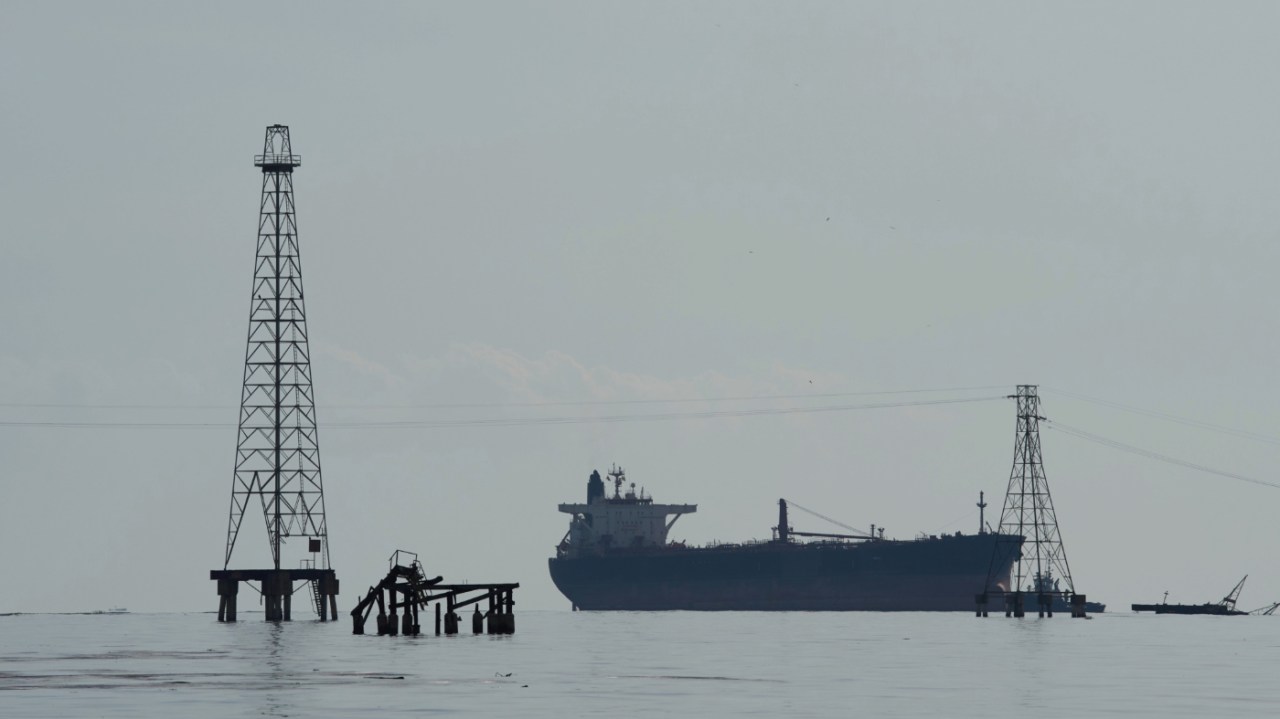
The US-Venezuelan oil agreement in media
Introduction: an unprecedented fact, a law with precedents
On January 3, 2026, U.S. special forces captured Nicolás Maduro in Caracas and flew him to New York to face federal drug-trafficking charges. Delcy Rodríguez, until then vice president, took over as acting president. Less than a month later she signed a reform of the Organic Hydrocarbons Law opening the sector to private investment. On August 28, Donald Trump announced "the biggest oil deal in world history": seventeen fields, some 65 billion barrels (roughly 21% of the country's proven reserves) granted under 100-year concessions to a new company formed with North American Blue Energy Partners (NABEP), in which the Pentagon's Office of Strategic Capital will hold 35% of the equity and the State Department will have the right to buy 20% of output at cost, with a right of first refusal on the rest. No text of the agreement has been published. Rodríguez herself describes the project as "bilateral" and "25-year"; the White House speaks of century-long concessions.
The situation is unprecedented. International law and constitutional law are not. This article argues that the deal is void ab initio on two convergent grounds: (i) the Venezuelan State's consent was obtained under armed coercion, and (ii) the person who expressed that consent lacks the legitimacy of origin required to commit the nation's patrimony. Further grounds reinforce the conclusion: breach of the Venezuelan constitutional order, the doctrine of odious contracts, and the principle of permanent sovereignty over natural resources. The closing section sketches how a future democratic government could defend that nullity before arbitral tribunals.
A methodological caveat first. The two central arguments operate on different planes and should not be conflated. A vice of consent presupposes a subject capable of consenting; illegitimacy of origin denies that the subject can consent on behalf of the Republic. These are not successive steps but alternative and cumulative routes: if Rodríguez had the capacity to bind the State, her consent was vitiated by force; if she did not, the consent is not attributable to Venezuela at all. Either way, the result is nullity.
1. Coercion as a vice of consent
1.1. The framework: Articles 51, 52 and 53 of the Vienna Convention
The Vienna Convention on the Law of Treaties (1969) distinguishes two forms of coercion with identical consequences. Article 51 deprives of any legal effect the expression of a State's consent procured by coercion of its representative through acts or threats directed against him. Article 52 declares void any treaty whose conclusion has been procured by the threat or use of force in violation of the principles of international law embodied in the UN Charter. Article 53 voids any treaty that conflicts with a peremptory norm of general international law (jus cogens) — and the prohibition on the use of force in Article 2(4) of the Charter is the paradigmatic example of that category.
None of these provisions is a treaty innovation; all codify customary law and therefore bind States that, like the United States, signed but never ratified the Convention. Their consequence is set out in Article 69: a void treaty has no legal force, and any party may require the other to re-establish, as far as possible, the position that would have existed had acts not been performed in reliance on it.
1.2. The facts fit the rule
Here the analysis can afford an unusual economy. The element of coercion need not be reconstructed by inference; it was declared by the very party that later signed. In her January 3 address, Delcy Rodríguez called the capture operation an “illegal and illegitimate kidnapping,” a “brutal act that violates international law,” and demanded Maduro’s immediate release, still calling him “the only and legitimate president of Venezuela.” Eight months later she publicly thanked Trump, Rubio, and “the U.S. government” for their support in developing the agreement.
Between one speech and the other there was no election, no plebiscite, no negotiation between equals. There was the continued presence of the military capability that carried out the capture, successive visits by senior U.S. officials to Miraflores, and the evident fact that the personal fate of the remaining Chavista leadership depended on Washington’s goodwill. The deal was negotiated, according to the presidential announcement itself, by the Secretary of State and the Secretary of War. That the U.S. signatory is the head of the military department is not a protocol detail: it identifies the instrument of pressure with the hand that signs.
Let us turn to the norms. If the Vienna Convention’s rules on coercion are used as the clearest international-law expression of the underlying principle, the facts engage both forms of coercion contemplated by Articles 51 and 52: coercion directed at the person of a representative, where the representative acts under the shadow of the forcible seizure of the government she had represented, and force exercised against the State itself, where the capital was the target of an armed incursion in breach of Article 2(4) of the Charter.
The Vienna Convention therefore provides the clearest international-law expression of the rule, even though its provisions do not directly govern the concession contract as such. Their significance here is normative: they articulate the principle that consent extracted through coercion cannot create a valid international legal obligation. The same principle may be applied, with appropriate caution, to the validity of a state concession whose consent was obtained under comparable conditions of coercion.
1.3. Possible objections and the laws’ answers
Several issues could be raised.
a) the deal is not a treaty between States but a concession contract with a private company, to which the Vienna Convention does not apply.
The answer is twofold. First, the very structure of the transaction belies its supposedly private character: the U.S. State is a shareholder (35%) and preferential purchaser, and the instrument was signed by two cabinet secretaries. There is an intergovernmental agreement — Rodríguez calls it a "binational project" — of which the concessions are the execution. Second, even where the Convention does not apply directly, the principle underlying it — that force does not generate right — is a general principle of law recognized in every domestic legal system as the vice of duress or intimidation in contracts (Article 1151 of the Venezuelan Civil Code; Article 276 of the Argentine Civil and Commercial Code, to cite two). International investment law is not immune to that principle; arbitral tribunals apply it as part of host-State law and transnational public policy.
b) Rodríguez was not coerced; she benefited. Whoever signs to remain in power acts out of convenience, not fear.
The objection is psychologically plausible and legally irrelevant. Coercion under Article 52 is predicated of the State, not of the official's state of mind. That the representative derives personal advantage from the act she consents to does not purge the force exercised against the State; it aggravates it, because it reveals that consent was purchased with the signatory's personal security, precisely the scenario of Article 51. And if the objection is accepted on its own terms (that Rodríguez signed to secure her political survival rather than out of conviction about the national interest) then the second requirement of the odious-contract doctrine (Section 4) is established without more.
1.4. The duty of non-recognition
There is a further consequence that is easily overlooked. Article 41(2) of the International Law Commission's Articles on State Responsibility (2001) requires all States not to recognize as lawful a situation created by a serious breach of a peremptory norm, nor to render aid or assistance in maintaining it. General Assembly Resolution 2625 (XXV) (the Friendly Relations Declaration) provides that no acquisition resulting from the threat or use of force shall be recognized as legal. The International Court of Justice applied that principle in the Namibia Advisory Opinion (1971), holding that States must refrain from entering into treaties or economic dealings with South Africa that would imply recognition of its illegal presence in the territory.
Applied here: a concession regime that is the direct fruit of an armed incursion is not merely void between the parties. Third States, companies contracting with the new entity, banks financing its operations and buyers of its crude are all under a duty of non-recognition that compromises the validity of the entire downstream chain of transactions.
2. The illegitimacy of origin of the negotiating regime
2.1. The Chavista fraud
On July 28, 2024, the National Electoral Council proclaimed Maduro the winner without ever publishing precinct-level results, as Venezuelan law requires. The opposition published copies of more than 80% of the tally sheets, showing Edmundo González Urrutia ahead by roughly two to one. The Carter Center, the only independent international observer accredited, concluded that the election did not meet international standards of electoral integrity and could not be considered democratic. The UN panel of electoral experts found the process lacked basic transparency. Dozens of States, including most of Latin America, recognized González as president-elect.
A judicial declaration of fraud is not required for its legal consequences to operate. It suffices that the legitimacy of the title is substantially contested before the international community for the resulting government to be treated as de facto rather than de jure.
2.2. From succeeding Maduro to succeeding to illegitimacy
Delcy Rodríguez was not elected. Her title derives from Article 233 of the Constitution, which provides for the vice president to assume office upon the president's absolute absence. But a derivative title cannot be stronger than the title it derives from: if Maduro was not the legitimate president, his vice president cannot succeed to a legitimacy he did not have. And even accepting the title arguendo, Article 233 requires, upon an absolute absence in the first four years of the term, that elections be called within thirty days. Eight months on, none have been called. The acting presidency has become an indefinite presidency, sustained (this is the decisive point) by the very foreign power with which the deal is signed.
The same applies to the body to which ratification is supposedly entrusted. The 2025 National Assembly, presided over by Jorge Rodríguez, the acting president's brother, emerged from legislative elections held in the same climate of opacity and boycotted by the opposition. A contract of national public interest approved by that Assembly gains no democratic legitimacy thereby; it merely acquires a second vice of origin.
2.3. International legal capacity and the Tinoco test
The consequence of illegitimacy of origin is the lack of capacity to dispose of the nation's patrimony. Care is needed here, because classical international law has traditionally been permissive toward de facto governments. The unavoidable precedent is the Tinoco arbitration (Great Britain v. Costa Rica, 1923), in which the arbitrator, William Howard Taft, held that a de facto government in effective control of the territory could bind the State, and that constitutional illegitimacy of origin was not opposable to third parties. But the same award contains the limit that matters here: Taft rejected the Royal Bank of Canada's claim because the bank knew the funds were destined for the personal use of Tinoco and his family, and a party contracting with knowledge of the diversion of purpose assumes the risk. Correctly read, Tinoco does not protect the informed counterparty.
And in our case the counterparty is not merely informed: it is the same power that forcibly removed the previous government, that "threw its weight behind" — in Senator Jack Reed's words — the unelected leadership that replaced it, and that then contracted with it. As Ricardo Hausmann wrote, Rodríguez has no legitimacy or constitutional power to commit Venezuela to a deal of this kind; Washington should have used its leadership to restore constitutional order first and then dealt with a legitimate government capable of making credible long-term commitments. A reverse sequence represents deepening the vices of administrative acts.
3. Breach of the Venezuelan constitutional order
The Constitution of the Bolivarian Republic of Venezuela (1999) is explicit about subsoil resources and about who may dispose of them. Let's review the main rules:
Article 5: sovereignty resides untransferably in the people, who exercise it directly and, indirectly, through the organs of Public Power. The people, not the government of the day, hold title.
Article 12: mineral and hydrocarbon deposits in the national territory belong to the Republic, are public-domain property and are therefore inalienable and imprescriptible.
Article 302: the State reserves to itself, by organic law and for reasons of national interest, the petroleum industry and other strategic activities.
Article 303: the State shall retain all shares of PDVSA.
Article 150: contracts of national public interest require National Assembly approval in the cases determined by law; and public-interest contracts with foreign States or official entities, or with companies not domiciled in Venezuela, always require it.
Article 187(9): the National Assembly authorizes the Executive to enter into contracts of national interest.
The Organic Hydrocarbons Law, in its historical text, required primary activities to be carried out by the State directly or through mixed companies with State participation above 50% (Article 22), subject to prior National Assembly approval (Article 33). The January 2026 reform loosened the mixed-company regime but -according to available analyses- stopped short of authorizing 55% foreign control of output, let alone century-long concessions. Even if the reform were valid, the deal exceeds it; and the reform itself was enacted by an acting Executive and an Assembly of contested legitimacy less than a month after the armed incursion (based on an act of force contrary to international law).
Then there is the opacity. As of this writing, no text of the agreement has been published. Citizens have been given discordant figures -25 years according to Caracas, 100 according to Washington- an operator that went from "unnamed" to identified in three days, and a corporate structure domiciled in Barbados. A contract of national public interest that commits a fifth of the country's reserves and that no one can read is, by definition, a contract concluded behind the sovereign's back.
4. The doctrine of odious contracts
4.1. From Sack to Wenar
Alexander Sack formulated the doctrine of odious debt in 1927: debts incurred by a despotic regime, without the people's consent and without benefit to them, with the creditor's knowledge, do not bind the nation but the regime personally, and may be repudiated by a successor government. The doctrine was born for public credit, but its logic is broader. The philosopher Leif Wenar (Blood Oil, 2016) has extended it to natural resources: whoever sells a country's oil without its people's authorization sells not what is his but what belongs to another, and a buyer who knows this acquires stolen goods. Other scholars have spoken directly of "odious contracts" and "odious extraction," and both the Institut de Droit International and UNCTAD have explored updating the doctrine for non-credit transactions.
The doctrine's value for this analysis is that it shifts the axis of legitimacy. The question is no longer whether the government of the day controls the territory, but whether the true owner of the resources -the people- consented, benefited, and whether the counterparty knew otherwise.
4.2. The three conditions are strongly implicated
Absence of popular consent. The deal was negotiated by an unelected president, successor to a president whose title derives from a fraudulent election, with an Assembly of contested legitimacy, without publication of the text and without any consultation mechanism. None of the channels through which Article 5 of the Constitution allows the people to exercise sovereignty was used.
Absence of benefit to the nation. It is not denied that the country needs investment; it is denied that this deal procures it in the nation's interest. The known terms — sale at cost, right of first refusal over all output, an equity stake for a foreign power's defense ministry, crude earmarked for that power's strategic reserve and armed forces — describe a supply mechanism for a third party, not a development program. And the most evident benefit obtained by the Venezuelan side is not for Venezuela but for its leadership: the continuation in power of a leadership that would otherwise share Maduro's fate. As one citizen interviewed after the announcement put it, the fear is that this was the bargaining chip Rodríguez gave to remain in power indefinitely.
Knowledge of the counterparty. This is the decisive requirement in any forum, and here it is met with unusual clarity. The United States cannot plead ignorance of the illegitimacy of the regime it contracted with, because it was the United States that denounced that illegitimacy for years, refused to recognize the 2024 results, placed a bounty on Maduro and captured him. It cannot plead ignorance of the coercion, because it was the one who exercised it. And NABEP, a long-standing Venezuelan operator, cannot plead ignorance of the constitutional and statutory requirements for a concession of this scope. The counterparty is not a good-faith third party surprised by the nullity; it is its co-author.
5. Permanent sovereignty over natural resources
The principle was reaffirmed in the Charter of Economic Rights and Duties of States (Res. 3281 (XXIX), Article 2) and in common Article 1(2) of the two 1966 International Covenants on Human Rights, which enshrines the right of all peoples to freely dispose of their natural wealth and resources and prohibits depriving a people of its own means of subsistence. The International Court of Justice subsequently recognized permanent sovereignty over natural resources as a principle of customary international law in Armed Activities on the Territory of the Congo (DRC v. Uganda, 2005, para. 244). Although the Court declined to apply the principle to the specific circumstances of the military exploitation of resources before it, its recognition of the principle’s customary character is significant: sovereign control over natural resources is not merely a matter of domestic policy, but forms part of the international legal framework governing their disposition.
Note the subject of the rule: the people, not the government. A century-long concession over a fifth of a country's reserves, granted under military pressure by an unelected government to a company partly owned by the occupying power's defense ministry, with sale at cost and a right of first refusal in that power's favor, is hard to reconcile with sovereignty exercised "in the interest of national development and the well-being of the people." It is not a use of the principle; it is its negation.
6. Defense strategy before international arbitration for a future free Venezuelan government
A future democratic government that declares the deal void should expect arbitral claims. It is worth anticipating the terrain. Venezuela denounced the ICSID Convention in 2012, so claims would likely proceed under bilateral investment treaties -NABEP's Barbados domicile seems no accident, given the Barbados–Venezuela BIT- before ad hoc tribunals or the ICSID Additional Facility. The lines of defense, in order of strength:
A. Jurisdictional objection for illegality of the investment. Investment tribunals have repeatedly held that an investment made in breach of host-State law does not enjoy treaty protection, whether because the treaty expressly requires the investment to be "in accordance with law" (Inceysa v. El Salvador, 2006; Fraport v. Philippines, 2007) or because good faith and the clean-hands doctrine impose that requirement as a matter of transnational public policy even without an express clause (Phoenix Action v. Czech Republic, 2009; Plama v. Bulgaria, 2008; World Duty Free v. Kenya, 2006, on contracts procured by corruption). A concession granted without the approval required by Articles 150 and 187(9) of the Constitution, by a de facto government and under coercion, is an investment illegal at its origin.
B. Due diligence and absence of legitimate expectations. The fair-and-equitable-treatment standard protects the investor's legitimate expectations at the time of investing. No expectation grounded in a contract void ab initio is legitimate. Tribunals have recognized that the investor has a duty to inform itself about the host State's legal framework (MTD v. Chile, 2004; Parkerings v. Lithuania, 2007) and that one who knowingly invests in an environment of contested legality assumes that risk. NABEP and its U.S. government partner knew they were dealing with an unelected regime, in a country whose constitution requires parliamentary approval for contracts of this kind, and under a threat of possible external invasion (United States).
C. Nullity for coercion as a matter of international public policy. An arbitral tribunal cannot give effect to a contract that is the direct result of a breach of Article 2(4) of the Charter without itself breaching the duty of non-recognition. That the coercing State is at the same time a shareholder of the investor forecloses any attempt to sever the State's military conduct from the company's commercial conduct.
D. Necessity and resource sovereignty (subsidiary argument). Article 25 of the Articles on State Responsibility admits necessity as a circumstance precluding wrongfulness where the act is the only way to safeguard an essential interest against a grave and imminent peril. It is a last-line argument: tribunals have read it restrictively (CMS v. Argentina, 2005; with nuances in LG&E v. Argentina, 2006) and it requires that the State not have contributed to the situation of necessity. Its value here is more rhetorical than jurisdictional, and it is best presented as reinforcement rather than as the core.
Conclusion: Agreements that are honored are based on law, not brute force.
The Venezuela–United States oil deal is void for a double and convergent reason. If the person who signed it could bind Venezuela, she did so with a will vitiated by the force that captured her predecessor and sustains her tenure. If she could not, the consent she gave is not Venezuela's. In either case, the act breaches the Constitution that reserves to the people title over their resources and to their Assembly the approval of contracts that commit them; it satisfies all three requirements of the odious-contract doctrine; and it contradicts the principle of permanent sovereignty over natural resources.
A future democratic government will have not only the right but the duty to declare that nullity, and will be able to do so without exposure to billion-dollar compensation, because the counterparties acted with full knowledge of the illegality and, in the case of the U.S. State, as authors of the coercion that produced it. Article 69 of the Vienna Convention and the case law on illegal investments converge on the same result: force does not generate right, and whoever contracts with knowledge bears the consequences.
Pacta sunt servanda, Roman law taught. We are servants of our pacts. But only of those concluded with legitimacy of representation, discernment, intention and freedom. When any of those elements is missing there is no pact to serve - only an act born dead, and a nation that retains intact the right to say it never consented.
References:
Section 1: Coercion as a Vice of Consent
- Vienna Convention on the Law of Treaties, opened for signature May 23, 1969, 1155 U.N.T.S. 331, arts. 51, 52, 53 and 69.
- Charter of the United Nations, signed June 26, 1945, art. 2(4).
- International Court of Justice, Military and Paramilitary Activities in and against Nicaragua (Nicaragua v. United States of America), Merits, I.C.J. Reports 1986, p. 14 (customary status of the prohibition on the use of force, opposable to the United States).
- Civil Code of Venezuela, Official Gazette No. 2,990 Extraordinary, July 26, 1982, arts. 1150-1153 (duress as a vice of consent; art. 1151 sets the standard).
- Civil and Commercial Code of the Nation (Argentina), Law 26,994, art. 276 (force and intimidation).
- International Law Commission, Articles on Responsibility of States for Internationally Wrongful Acts, annexed to G.A. Res. 56/83, Dec. 12, 2001, arts. 25, 40 and 41(2).
- U.N. General Assembly, Declaration on Principles of International Law concerning Friendly Relations and Co-operation among States, G.A. Res. 2625 (XXV), Oct. 24, 1970.
- International Court of Justice, Legal Consequences for States of the Continued Presence of South Africa in Namibia (South West Africa) notwithstanding Security Council Resolution 276 (1970), Advisory Opinion, I.C.J. Reports 1971, p. 16, paras. 122-125.
- Rodríguez, Delcy, televised address (VTV), Caracas, Jan. 3, 2026 (describing the capture as an "illegal and illegitimate kidnapping").
- Trump, Donald J., Truth Social post, Aug. 28, 2026 (announcement of the deal; negotiators Rubio, Hegseth and Rodríguez).
- Rodríguez, Delcy, televised address (VTV), Aug. 29, 2026 (25-year "binational project", 17 fields, 1.5 million bpd).
- The White House, Fact Sheet on the Venezuela energy agreement, Aug. 31, 2026 (100-year concessions to NABEP; 35% stake for the Department of War's Office of Strategic Capital; State Department purchase of 20% at cost and right of first refusal).
Section 2: Illegitimacy of Origin and International Legal Capacity
- The Carter Center, Statement on Venezuela's Presidential Election, Atlanta, July 30, 2024.
- United Nations, Report of the Panel of Electoral Experts on the July 28, 2024 Presidential Election in Venezuela, August 2024.
- Constitution of the Bolivarian Republic of Venezuela, art. 233 (absolute absence of the President; elections within thirty days).
- Tinoco Claims Arbitration (Great Britain v. Costa Rica), 1 R.I.A.A. 369 (Oct. 18, 1923), Sole Arbitrator William Howard Taft.
- Hausmann, Ricardo, posts on X, Aug. 29-30, 2026; statements reported in UPI, "Opposition to oil deal with U.S. grows in Venezuela", Sept. 1, 2026.
- Reed, Jack (U.S. Senator, Rhode Island), statement on the NABEP deal, Sept. 1, 2026, quoted in CBS News, "White House says deal to take control of Venezuelan oil will rely on North American Blue Energy Partners".
Section 3: Breach of the Venezuelan Constitutional Order
- Constitution of the Bolivarian Republic of Venezuela, Official Gazette No. 5,453 Extraordinary, Mar. 24, 2000, as amended by Amendment No. 1 (Official Gazette No. 5,908 Extraordinary, Feb. 19, 2009), arts. 5, 12, 150, 187(9), 233, 302 and 303.
- Organic Hydrocarbons Law, Decree No. 1,510 (Official Gazette No. 37,323, Nov. 13, 2001), as amended by Official Gazette No. 38,443, May 24, 2006, arts. 22 and 33.
- Law of Partial Reform of the Organic Hydrocarbons Law, passed by the National Assembly and promulgated Jan. 29-30, 2026.
Section 4: The Doctrine of Odious Contracts
- Sack, Alexander Nahum, Les effets des transformations des États sur leurs dettes publiques et autres obligations financières, Paris: Recueil Sirey, 1927.
- Howse, Robert, The Concept of Odious Debt in Public International Law, UNCTAD Discussion Paper No. 185, Geneva, July 2007.
- Wenar, Leif, "Property Rights and the Resource Curse", Philosophy & Public Affairs, vol. 36, no. 1 (2008), pp. 2-32.
- Wenar, Leif, Blood Oil: Tyrants, Violence, and the Rules That Run the World, Oxford University Press, 2016.
Section 5: Permanent Sovereignty over Natural Resources
- U.N. General Assembly, Permanent Sovereignty over Natural Resources, G.A. Res. 1803 (XVII), Dec. 14, 1962, paras. 1 and 7.
- U.N. General Assembly, Charter of Economic Rights and Duties of States, G.A. Res. 3281 (XXIX), Dec. 12, 1974, art. 2.
- International Covenant on Civil and Political Rights and International Covenant on Economic, Social and Cultural Rights, Dec. 16, 1966, common art. 1(2).
- International Court of Justice, Armed Activities on the Territory of the Congo (Democratic Republic of the Congo v. Uganda), Judgment, I.C.J. Reports 2005, p. 168, para. 244.
Section 6: Defense Strategy before International Arbitration
- Denunciation of the ICSID Convention by the Bolivarian Republic of Venezuela, notified Jan. 24, 2012, effective July 25, 2012 (art. 71 of the Convention).
- Agreement between the Government of Barbados and the Government of the Republic of Venezuela for the Promotion and Protection of Investments, signed July 15, 1994, in force Oct. 31, 1995.
- Inceysa Vallisoletana S.L. v. Republic of El Salvador, ICSID Case No. ARB/03/26, Award, Aug. 2, 2006.
- Fraport AG Frankfurt Airport Services Worldwide v. Republic of the Philippines, ICSID Case No. ARB/03/25, Award, Aug. 16, 2007 (annulled by the ad hoc Committee's Decision of Dec. 23, 2010; the resubmitted case, Fraport II, ICSID Case No. ARB/11/12, Award of Dec. 10, 2014, reached the same conclusion on illegality of the investment).
- Phoenix Action, Ltd. v. Czech Republic, ICSID Case No. ARB/06/5, Award, Apr. 15, 2009.
- Plama Consortium Limited v. Republic of Bulgaria, ICSID Case No. ARB/02/24, Award, Aug. 27, 2008.
- World Duty Free Company Limited v. Republic of Kenya, ICSID Case No. ARB/00/7, Award, Oct. 4, 2006.
- MTD Equity Sdn. Bhd. and MTD Chile S.A. v. Republic of Chile, ICSID Case No. ARB/01/7, Award, May 25, 2004.
- Parkerings-Compagniet AS v. Republic of Lithuania, ICSID Case No. ARB/05/8, Award, Sept. 11, 2007.
- CMS Gas Transmission Company v. Argentine Republic, ICSID Case No. ARB/01/8, Award, May 12, 2005.
- LG&E Energy Corp., LG&E Capital Corp. and LG&E International Inc. v. Argentine Republic, ICSID Case No. ARB/02/1, Decision on Liability, Oct. 3, 2006.
Press sources on the terms of the deal (August-September 2026)
- Associated Press / NPR, "Trump says U.S. has entered deal with Venezuela to take control of 65 billion barrels of oil reserves", Aug. 28, 2026.
- The Hill, "Delcy Rodriguez details $209 billion annual Venezuela oil deal with US", Aug. 30, 2026.
- CBS News, "White House says deal to take control of Venezuelan oil will rely on North American Blue Energy Partners", Sept. 1, 2026.
- Christian Science Monitor, "US-Venezuela oil deal promises a windfall. But, Venezuelans ask, for whom?", Aug. 31, 2026 (source of the citizen's quote on the "bargaining chip").
- Responsible Statecraft, "Trump plan to control Venezuelan oil has more holes than Swiss cheese", Sept. 1, 2026 (scope of the January hydrocarbons reform; legitimacy of the 2025 Assembly).